
October 1 –> October 8 (regular time & classroom)
A Brief History of Japanese Buddhism & The Civilizational Culture of Buddhism meets Japan’s particular cultural identity
- Introduction to Course: Read the Course Overview & Requirements & Final Project pages on this site
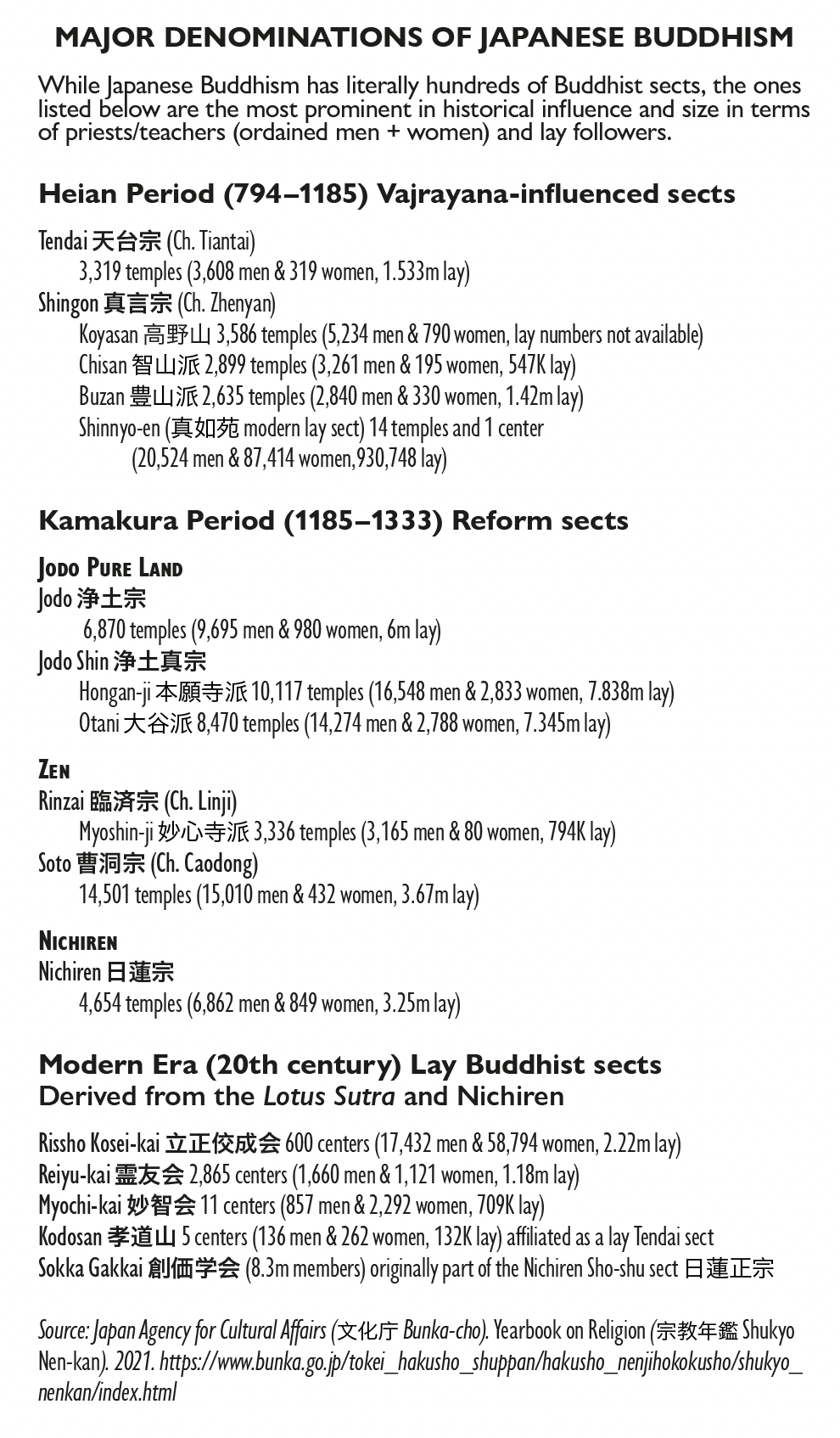
- Class Issue: Around 500 BCE, Shakyamuni Buddha discovered a radical new way of understanding the meaning of life, which he taught to all genders and classes. His teachings known as Buddhism spread across India and all of Asia providing a “civilizational culture” of transcending racial and national boundaries under the idea that all sentient beings may attain enlightenment. Japan has a long history as an insular, island nation. How did Japan first take in this massive “civilizational culture” distilled through both Indian and Chinese thought, and how has it adapted it to its own particular cultural identity? We will also examine Japanese Buddhism’s attempts to adapt to the modern nation state, both in grappling with western liberalism and socialism as well as “archaic” Shinto-Confucian nationalism.
- Presentation: A Brief History of Japanese Buddhism (PDF) Click here for the audio lecture that goes with the PDF & The Civilizational Culture of Buddhism meets Japan’s particular cultural identity in Ways of Thinking about Religion and Culture (PDF)
- Show & Tell with Japanese Buddhism: bring to class anything you can find about Japanese Buddhism, like a talisman from a temple, a book you read, a Buddhist image, etc. You don’t have to be an expert about it. Just talk about your personal impressions of it.
October 8 (make-up from previous week 6th period @ 18:10-17:40 regular classroom)
Buddhist Social Analysis & The Present Crisis in Japanese Society, The Disconnected Society 無縁社会
- Class Issue: The Buddha summarized the goal of his teachings as the end of suffering. In order for Buddhism to be relevant for Japanese society today, it must understand what is the suffering of its people. In this class, we will learn the Buddha’s classic structure for understanding his entire teachings in the Four Noble Truths and then see how it can be used to understand the biggest social problems facing Japan, perhaps most succinctly summarized in the concept of The Disconnected Society (無縁社会 mu-en shakai)?
- Presentation: The Four Noble Truths: A Buddhist Approach to Understanding Self and Society (see more details here) AND A Very Short Audio Lecture on the Process of the 4 Noble Truths (5 mins)
- Video: NHKドキュメンタリ:無縁社会 (NHK Documentary: The Disconnected Society) 45 mins.
- Supplementary Video: Dying Out of Sight: Hikikomori in an Aging Japan (NHK World January 17, 2021)
- Conclusion #1: Class analysis of the Disconnected Society
- Conclusion #2: Reflection on The Matrix of Social Problems in Japan
- Recommended Reading: excerpt from Precarious Japan by Anne Allison (Duke University Press, 2013)

Homework for 10/15:
- Begin to research and consider which sub-theme you will choose to focus on (see the list of topics here). You must choose after next week’s class on October 15th.
- Recommended Reading for next week: Reconstructing Priestly Identity and Roles in Contemporary Japan and the Development of Socially Engaged Buddhism (first 1/3 to the beginning of section II on page 8)
- Preparation Reading for next week: read this latest feature from the Japan Times “Suicide in Japan: Seeking to part the dark clouds as pandemic threatens recent progress“
October 15
The Present Crisis in Japanese Buddhism: Funeral Buddhism & Gender
Class Issue: Japanese Buddhism today is facing a number of crises. The most well known is described in the term “Funeral Buddhism” (葬式仏教 soshiki bukkyo) which is a pejorative term criticizing monks and temples with only being concerned about doing funeral rituals for financial payment. Japanese Buddhist priests are well known for their presence after someone has died, but can they be there to support the terminally ill and their loved ones before death takes place? A second major issue, which is much less discussed, is the marginalized role of women as teachers and leaders in Buddhist communities. In this era where gender sensitivity and equality is highly regarded, how can Buddhism survive if it remains tied to conservative traditions?
- Group Work #1: Reflection on the Matrix of Buddhist Problems in Japan & working with the Iceberg of Dukkha to analyse the crisis.

- Group Work #2: Working with the Diamond Pyramid of Nirvana to imagine solutions to the crisis.
- See Joanna Macy’s The Three Dimensions of the Great Turning (explains the 3 bases of action in the Diamond Pyramid of Nirvana)
- Conclusion: Choosing your topic for the semester and breaking into cohorts.
 Contemporary Buddhism in Japan & Asia