This course is offered as a companion course to Japanese Buddhism and Social Suffering (日本仏教と現代社会) by the same instructor—but you do not have to take both courses.
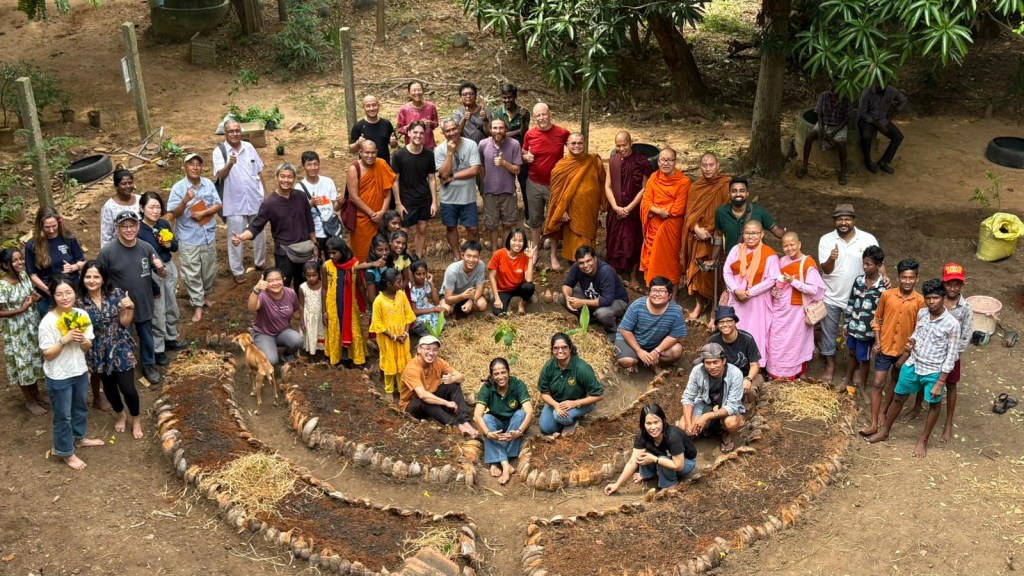
Buddhism is the largest indigenous religion of Asia and has ancient roots in every country in the region, including majority Muslim ones like Bangladesh and Indonesia. However, in the contemporary age, it is in crisis, principally from the way economic and scientific modernity challenges its worldview and values. Buddhist institutions throughout the region have been responding to this crisis in variety of ways from nationalistic chauvinism, to market and technologically savvy new Buddhist organizations, and also progressive social action movements known as Socially Engaged Buddhism. This course will look at these different responses and attempts by Buddhism to remain relevant in the dynamic social landscape of contemporary Asia, while offering numerous case studies familiar to the instructor’s 25 years of experience throughout the region.
We will use a wide variety of methods in the classroom, including videos, guest speakers, group work, etc. During lectures, ample time will be given for questions and discussion. A prior knowledge of Buddhism is not necessary. Using Buddhism as a lens, we will investigate a wide variety of social issues in Asia and take time to enjoy interaction with each other. An optional meditation class will also be offered in the evenings.
Method of Evaluation:
- Exam N/A
- Unit Reflections & Group Reports (5)(60%)
- Attendance, Participation(40%)
Reminder: This is an intensive course that has been consolidated from 14 weeks into 7 weeks, so each week is a double class, 3 hours instead of 1.5 hours of class time. Therefore, lectures, readings, and homeworks reflect a more intensive approach with more weekly work than a usual 14 week full semester course.
Policy on Using Generative AI:
In this course, emphasis is placed on students’ own thinking and expressive abilities. Therefore, the use of generative AI is, in principle, prohibited. I enjoy hearing students’ own voices. Many non-native English speakers have creative and insightful ways of expressing themselves. If you use AI even to correct English grammar issues, you may lose your distinctive voice. A student who hands in assignments that have lost their voice and use a sterilized AI voice will be graded down and in certain cases asked to meet with me separately to clarify their ideas. This course is not an English course and you will not be evaluated on your English level at all. If you are unsure about what is permitted, please consult the lecturer in advance.
Teacher Profile:
Jonathan S. Watts has lived in Indonesia, Thailand and Japan for the past 30 years involved in NGO/NPO work with Buddhist based organizations, while writing and editing a collaborative volume by Buddhist scholar-activists Rethinking Karma: The Dharma of Social Justice. Ed. Jonathan S. Watts (Chiang Mai, Thailand: Silkworm Press, 2009). Since 2000, he has been researching and assisting Japanese Buddhists engaged in a variety of forms of social work. This research was published as Engaged Buddhism in Japan in two volumes. These two volumes were preceded by three other books on related issues: Lotus in the Nuclear Sea: Fukushima and the Promise of Buddhism in the Nuclear Age (Yokohama: International Buddhist Exchange Center, 2013), Buddhist Care for the Dying and Bereaved (Boston: Wisdom Publications, 2012) and This Precious Life: Buddhist Tsunami Relief and Anti-Nuclear Activism in Post 3/11 Japan (Yokohama: International Buddhist Exchange Center, 2012). Since 2008, he has been engaged in Buddhist chaplaincy training at the Rinbutsuken Institute for Engaged Buddhism in Tokyo. From 1999-2018, he translated and edited a number of volumes on Japanese Pure Land Buddhism at the Jodo Shu Institute of Comprehensive Buddhist Studies.
 Contemporary Buddhism in Japan & Asia